FM Coaching · Fitness Industry News
Mediterranean Masters Weightlifting 2026: Lisbon Schedule, Categories and What to Watch
The sixth Mediterranean Masters Weightlifting International Open is scheduled for 29 October–1 November in Lisbon. Follow the confirmed timetable, age categories, rules and official results sources.
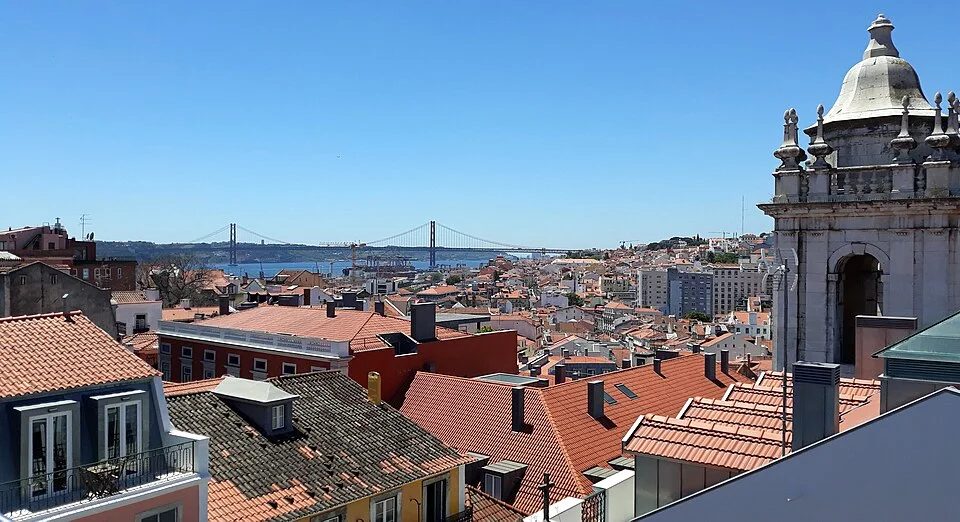

Lisbon is preparing for four days of international Masters weightlifting from 29 October to 1 November 2026. At the sixth Mediterranean Masters Weightlifting International Open, two competition platforms will stage lifts across age groups stretching from competitors in their thirties to athletes in their eighties and beyond.
By FM Coaching Editorial Team | Published as a pre-event guide | Information checked 26 October 2026
One detail makes the published programme particularly revealing: the opening sessions are devoted to some of the oldest competitors, while the youngest divisions lift on the final day. It is an unusual way to see the breadth of a sport often discussed almost exclusively through younger elite athletes. The event is not an exhibition; it is a structured competition with official weigh-ins, age-and-bodyweight categories, judges and medal awards.
The essentials: when and where is the Lisbon Masters weightlifting event?
Portugal's official event website and Visit Lisboa both confirm the 29 October–1 November dates. The venue is the Fundação INATEL sports pavilion at Parque de Jogos 1.º de Maio in Alvalade, Lisbon. The Portuguese Weightlifting Federation (FNH) is identified as organiser, in association with the International Masters Weightlifting Association (IMWA).
| Event detail | Verified information |
|---|---|
| Official event | Sixth Mediterranean Masters Weightlifting International Open Tournament, Lisbon 2026 |
| Dates | Thursday 29 October – Sunday 1 November 2026 |
| Venue | INATEL Pavilion, Parque de Jogos 1.º de Maio, Alvalade, Lisbon, Portugal |
| Street location | Avenida / Rua Rio de Janeiro, Alvalade, 1700-330 Lisboa |
| Competition format | Snatch and clean and jerk; age groups and bodyweight classes |
| Eligibility | Age 30 or above in 2026; official registration information specifies birth year 1996 or earlier |
| Facilities | Two competition platforms and 12 warm-up platforms, according to organiser |
| Schedule and start lists | Organiser's official timetable |
All timings in this article refer to Lisbon local time. Treat published session times as a planning guide: event organisers can make late adjustments for operational reasons.
A four-day timetable that moves through the generations
The organiser has published 13 numbered sessions across two platforms, A and B. The oldest scheduled age divisions begin on Thursday; the programme then progresses towards athletes in their thirties on Saturday and Sunday. Weigh-ins are listed two hours before each session. That matters because a competitor's arrival time is not the same as the start time on the platform.
| Date | First platform start | Key published age groups | Planning note |
|---|---|---|---|
| Thursday 29 October | 13:00 | Men 60–80; women 60–75 across listed sessions | Opening ceremony listed at 15:00 |
| Friday 30 October | 09:30 | Men 45–55; women 45–55 | Four numbered session blocks during the day |
| Saturday 31 October | 09:30 | Men 35–40; women 35–40 | Sessions continue into the evening |
| Sunday 1 November | 09:30 | Men 30; women 30 and some 35 | Latest listed platform start is 11:45 |
For a precise competitor start time, check the live schedule, including platform allocation and the separate men's and women's start-list documents. An athlete in a named age group may not share the same session as every other lifter in that group. The website also publishes expected finishing times, which are estimates rather than guarantees.
Thursday: the older age groups lead the competition
At 13:00 on 29 October, the schedule assigns M80 and M75 lifters to Platform A, and W75, W70 and W65 lifters to Platform B. Later groups include M70, W60, M65 and M60. For spectators, this makes the first day especially relevant to anyone interested in how organised strength sport continues into later life.
Friday and Saturday: the middle age divisions
Friday starts at 09:30, with M55 and M50 divisions appearing in the early sessions and M45 and W45 divisions later. Saturday's published sessions cover M40, M35, W40 and W35 groups. The two-platform arrangement means a visitor wanting to follow a particular competitor must pay attention to the platform column, not merely the event date.
Sunday: the youngest eligible Masters divisions
Sunday's timetable places M30 lifters on both platforms from 09:30, followed by women's 30 and selected 35 groups from 11:45. The official documents remain the correct source for last-minute reassignment, weigh-in and competitor-order information.
Why the age categories matter just as much as bodyweight
Age in Masters weightlifting is a competition category, not simply a background statistic. According to the organiser's category page, the tournament has 13 five-year age bands from M30/W30 (30–34) to M90/W90 (90–94). These are published eligibility bands; their appearance in the regulations does not prove that each band will have entrants.
The published men's bodyweight categories are 60, 65, 70, 75, 85, 95, 110 and over 110 kg. The women's categories are 49, 53, 57, 61, 69, 77, 86 and over 86 kg. An athlete is classified using both the age division and the relevant bodyweight category, which is why a medal must be understood in the context of its particular competition class.
For readers following Masters results for the first time, comparing the heaviest successful lift of two competitors without knowing their bodyweight and age classes can be misleading. The results table, class and total tell a more complete sporting story than one dramatic photograph of a barbell overhead.
Snatch, clean and jerk: how a result is made
The snatch is the movement in which the barbell travels from the floor to overhead in one continuous movement. In the clean and jerk, the lifter first brings the bar to the shoulders, then drives it overhead. Successful attempts in each discipline contribute to the athlete's Olympic total.
Under the published tournament rules, lifters have three attempts at each discipline. A valid lift in both is required to record a total and qualify for an overall placing and medals. The event's rules also make a distinction that is easy to miss: a lifter who does not make a successful snatch may still attempt the clean and jerk under the updated IMWA rule, but cannot produce a valid two-lift total from that performance alone.
For viewers, this adds tension beyond the headline kilogram figure. An athlete may lift impressively in one discipline and still have no official total. Conversely, an athlete who builds a solid total through successful attempts in both disciplines may finish ahead of a competitor with a more spectacular single lift.
Adaptive competition is part of the Lisbon event
The tournament's published category rules describe eight adapted-weightlifting (PW) classifications. They cover hearing, visual and intellectual impairments; different limb-impairment classifications; mobility or joint-instability limitations; wheelchair users; and short stature. Specific classifications and competition arrangements should be checked against the relevant published regulations rather than assumed to be identical across all athletes.
This is a meaningful part of the competition's identity. The organiser places adaptive lifting alongside its international Masters programme, making inclusion an element of the event structure rather than a generic slogan. The precise number of adapted entrants or medal winners should only be reported once verified from an official list or results document.
How many athletes and countries are expected?
Visit Lisboa's event listing projects approximately 300 athletes from 41 countries. Meanwhile, the organiser's registration information describes a maximum capacity of 350 athletes and says the event is open internationally. These figures describe projections or capacity, not independently confirmed final attendance or a verified list of competing nations.
The organiser's participant page explicitly notes that its broad country list reflects previous editions. It should therefore not be used to claim that every nation displayed there will compete in Lisbon this year. Official start lists, final results and federation announcements are better evidence for identifying actual participants.
Medals, team trophies and the question of records
The awards page describes gold, silver and bronze medals for age and weight categories, awards using Q-Masters points for standout athletes, and trophies for the top three teams. Teams may comprise up to two men and two women. Certificates are also described for lifters who register a total, with participation certificates for those who do not.
An important accuracy check concerns records. The official rules say IMWA Masters world records cannot be set at this event, while the Mediterranean Masters programme maintains its own records. Any post-event report should distinguish a Mediterranean competition record from a recognised international world record rather than using the terms interchangeably.
There are no completed 2026 championship results to report as of this article's 26 October fact-check. Do not mistake a preliminary start-list total, projected best lift or entry figure for an achieved competition result.
Getting to the INATEL Pavilion in Alvalade
The location is listed as the INATEL Pavilion, Parque de Jogos 1.º de Maio, near Avenida Rio de Janeiro in the Alvalade area of Lisbon. The organiser describes spectator seating, changing facilities, athlete accreditation areas, two competition platforms and a separate warm-up zone. This is a specific sports venue, not a generic city-centre exhibition hall.
Overseas visitors can travel through Lisbon's Humberto Delgado Airport. The organiser's travel page provides transport guidance, while athletes and supporters should use current local transit information for a practical route on their actual arrival day. Keep sufficient time for traffic, venue access and an athlete's scheduled weigh-in. Where an official travel or hotel arrangement is advertised, confirm the conditions with the organiser before paying.
Visit Lisboa publishes a public event listing and opening hours, but it does not by itself confirm every aspect of ticketing. Spectators should consult the organiser for the latest access policy and any changes to venue rules before travelling.
What Lisbon 2026 tells us about competitive strength after 30
The schedule presents a sharper picture of Masters sport than the familiar claim that age is merely a number. Lifting is technically demanding. Preparation must account for practice, mobility, recovery and the athlete's training history, while the challenge of selecting realistic competition attempts remains. But the Lisbon programme shows that the sport accommodates structured competition across a range of age and bodyweight classes instead of confining meaningful competition to a single stage of adult life.
That does not mean every person should train like a competitive weightlifter. Technique work, progressive loading and appropriate individual supervision are important, particularly when learning fast overhead lifts or returning after time away. The wider lesson is that strength participation can be planned over many years, rather than treated as a short-term project.
FM Coaching's online personal training information explains how individual training plans and weekly check-ins can be organised around a person's goals and experience. FM Coaching is an independent fitness publisher and coaching service, not an official championship organiser, entry agent or results authority.
Where to find start lists and results
The most reliable starting point is the organiser's schedule and start-list page. It links the platform timetable and men's and women's start-list PDFs. To verify a specific athlete, match the full name with the age group, bodyweight class, platform and competition session. Do not rely solely on a promotional social post for medal or record claims.
Once the tournament begins, results should be added to this same news URL only after publication by an authoritative organiser or federation source. A useful results update would identify the date, athlete, nation, age category, bodyweight category, successful snatch, successful clean and jerk, combined total and record status where confirmed. It should also clearly state which sessions have completed and which are still pending.
Lisbon Mediterranean Masters Weightlifting 2026: frequently asked questions
When does the Mediterranean Masters Weightlifting 2026 start?
The competition is scheduled to begin on Thursday 29 October 2026. The published opening platform sessions start at 13:00 Lisbon time.
Where is the 2026 event taking place?
At the INATEL Pavilion in Alvalade, Lisbon, within Parque de Jogos 1.º de Maio near Avenida Rio de Janeiro.
What is the minimum age to compete?
The organiser specifies age 30 or older in 2026, with athletes born in 1996 or before eligible by age. Other eligibility and registration conditions still apply.
Do competitors have to meet a minimum qualifying total?
The official registration page states that no qualifying total is required. Registration dates and eligibility documents must still be followed; its published late-entry period ended on 30 September 2026.
Will the competition include adapted weightlifting?
Yes. The official event website describes eight adapted-weightlifting classifications. Check the programme for the specific competitors and sessions included.
Where can I see the official results?
Start with the organiser's competition timetable and start-list hub and its official announcements. Verified 2026 results were not yet available when this preview was checked on 26 October.
Official sources and editorial status
This is an independent pre-event guide using the tournament organiser's event information, published schedule, category list, rules, awards information, and Visit Lisboa's listing. Information was checked on 26 October 2026. Any future additions of results should show an authentic modification date and attribute confirmed data to its source.
Sources and verification
- https://mediterraneanportugal2026.fnhalterofilismo.pt/en/evento
- https://mediterraneanportugal2026.fnhalterofilismo.pt/en/cronograma
- https://mediterraneanportugal2026.fnhalterofilismo.pt/en/categorias
- https://mediterraneanportugal2026.fnhalterofilismo.pt/en/regulamento
- https://mediterraneanportugal2026.fnhalterofilismo.pt/en/classificacao
- https://mediterraneanportugal2026.fnhalterofilismo.pt/en/inscricao
- https://mediterraneanportugal2026.fnhalterofilismo.pt/en/transportes
- https://www.visitlisboa.com/en/events/mediterranean-masters-weightlifting-international-open-tournament-2026
- https://commons.wikimedia.org/wiki/File:Weight_lifter.jpg
- https://commons.wikimedia.org/wiki/File:LisbonSkyline.jpg
