FM Coaching · Fitness Research
Reformer Pilates for Menopause: New 2026 Study Explained
A 2026 trial found both Reformer and Mat Pilates improved overall menopausal symptom scores compared with education, without a significant head-to-head difference. We examine the new research, limitations, costs, and practical training choices.
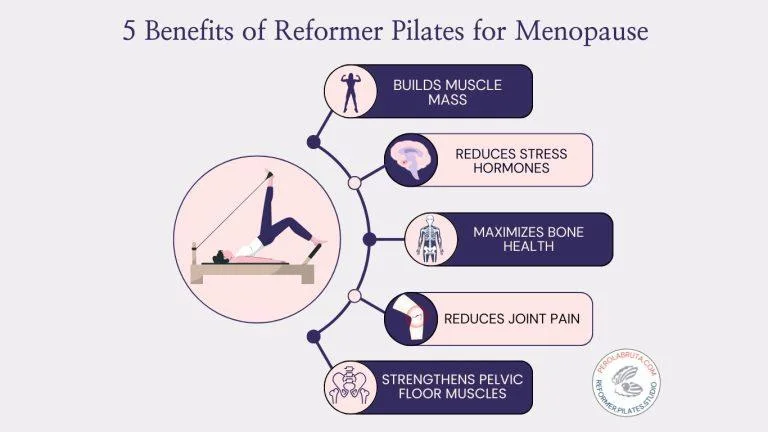
Reformer Pilates is increasingly marketed as a menopause-friendly workout, but a new randomised trial challenges the idea that the machine is necessarily better than an exercise mat. Published in Scientific Reports on 10 September 2026, the study found that both supervised Reformer Pilates and home-based Mat Pilates improved overall menopausal symptom scores more than lifestyle education in women with obesity. The difference between the two exercise methods on the study’s main outcome was not statistically significant. Read the original study.
That is welcome news for women who enjoy a studio class—but also for anyone who cannot afford or travel to one. The more interesting question is not whether Reformer Pilates is fashionable. It is which benefits have actually been measured, what the research cannot yet prove, and how Pilates fits into a complete approach to menopause health.
FM Coaching research news analysis · Evidence checked 28 October 2026 · The article reports research rather than offering personalised medical treatment advice.
The answer in 30 seconds
Is Reformer Pilates good for menopause? It can be a worthwhile way to move. In the September 2026 trial, twice-weekly supervised Reformer and home-based Mat Pilates both improved overall menopause symptom scores over eight weeks compared with lifestyle education. Reformer was not significantly better than Mat Pilates on the primary outcome. Some secondary findings favoured Reformer, but the trial was small, involved only postmenopausal women with obesity, and compared supervised with unsupervised exercise. It cannot establish what the machine alone adds.
Bottom line: pick a suitable class or home programme you can keep doing, and combine it with muscle-strengthening, weight-bearing and aerobic exercise appropriate to your health. Seek medical advice for troublesome symptoms rather than relying on Pilates as a treatment.
The 2026 study at a glance
| Study detail | What the researchers did |
|---|---|
| Published | 10 September 2026, Scientific Reports; Kocamer and Atılgan |
| Participants | 45 postmenopausal women with obesity; 15 in each group |
| Study design | Randomised controlled trial with three groups |
| Reformer group | Supervised Reformer Pilates |
| Mat group | Home-based Mat Pilates |
| Comparison group | Structured lifestyle education |
| Duration | Eight weeks; Pilates twice weekly |
| Main outcome | Change in overall menopausal symptom score |
| Other outcomes | Menopause quality of life, sleep, depressive symptoms, body composition and blood lipids |
Unlike testimonials from a Pilates studio, the study used a comparison group. That makes its findings more informative than simple before-and-after stories. It does not make the trial definitive: each group contained only 15 women, and everyone was followed for a relatively short time. Study methods and abstract.
What happened to menopause symptoms? The result that matters most
The researchers used a menopause-symptom scale as their prespecified primary outcome. Compared with lifestyle education, the adjusted difference was −6.47 points for supervised Reformer Pilates (95% confidence interval −8.83 to −4.12) and −5.24 points for home-based Mat Pilates (95% confidence interval −7.63 to −2.85). Both comparisons were statistically significant after adjustment; the comparison between Reformer and Mat was not.
These figures describe group-average differences on a specific questionnaire, not the percentage of symptoms cured. They cannot tell a particular woman how many hot flushes she will have next month. Nor does a numerically larger change prove Reformer is superior when the direct comparison did not reach statistical significance.
Research graphic: adjusted mean differences in symptom scores compared with the education group; lower scores mean greater improvement. This is not evidence of a statistically significant head-to-head advantage for Reformer Pilates.
What did Reformer do better?
The study reported stronger results for supervised Reformer Pilates on some secondary outcomes, including menopause-specific quality of life and selected body-composition measures. That distinction is important: secondary findings can point researchers towards questions to investigate, but they should not be promoted as proof that everyone will lose fat, gain muscle or need a Reformer membership.
Sleep quality and depressive symptom measures improved over time in all three groups, but the study did not find a significant group-by-time difference for either. It is therefore inaccurate to conclude from this trial that Reformer Pilates specifically treats insomnia or depression.
How to read the 2026 Pilates results without being misled
The symptom figures in headlines are adjusted differences compared with the education group on the Menopausal Symptom Evaluation Scale (MSES). They are not the amount of fat lost, a percentage improvement, or the number of hot flushes prevented. Negative numbers indicated lower symptom scores on that questionnaire.
| Result | What it supports | What it cannot tell us |
|---|---|---|
| Reformer: adjusted difference −6.47 (95% CI −8.83 to −4.12) | Better average symptom scores than lifestyle education in this small trial | That each participant will improve by 6.47 points |
| Mat: adjusted difference −5.24 (95% CI −7.63 to −2.85) | Home-based Mat also outperformed lifestyle education | That exercising at home works equally well for everyone |
| No significant difference between Pilates groups on the primary measure | No convincing head-to-head advantage was demonstrated | That both methods are clinically identical or proven equivalent |
| Selected secondary outcomes favoured Reformer | Worth further research on quality of life and body composition | That Reformer uniquely treats menopause or guarantees fat loss |
Key nuance: “No statistically significant difference” is not the same as a rigorous equivalence finding. With only 15 participants per group, the study may have been too small to detect some real differences. And because the Reformer group had supervision while the Mat group practised at home, class contact, adherence and coaching may have contributed to differences. These are reasons to be careful with claims in either direction.
For readers who want to see the statistical methods, the original paper identifies a group-by-time interaction for the primary outcome (p < 0.001) and adjusted comparisons versus education. Read the original September 2026 paper, rather than interpreting a social-media image as a treatment recommendation.
Reformer versus Mat Pilates for menopause: what is actually different?
| Question | Reformer Pilates | Mat Pilates |
|---|---|---|
| Where it happens | Usually a studio, with a spring-resistance carriage | At home or in classes on a mat |
| Equipment | Specialist machine; adjustable springs and straps | Mat, sometimes cushions or small props |
| Support in featured trial | Supervised sessions | Home-based sessions |
| Overall menopause-symptom scores | Improved vs education | Improved vs education |
| Significant primary-outcome advantage? | No proven advantage over Mat | No proven advantage over Reformer |
| Some secondary outcomes | Better on selected measures in this small trial | Also showed benefits |
| Cost and access | Studio travel and fees may be barriers | Usually easier and cheaper to access |
One overlooked limitation is the supervision difference. The trial contrasted supervised sessions on machines with sessions performed at home. Extra in-person feedback, class atmosphere or adherence may influence outcomes; the study cannot isolate equipment alone as the cause of every difference. If you enjoy Reformer, that experience can be valuable. If Mat is what you can sustain, the primary finding does not say you are choosing an inferior workout.
What other 2026 studies say about Pilates and menopause
A single trial should not carry the whole story. Other research published in 2026 provides useful context without making Pilates a medical cure.
| Evidence | Population and design | What it adds |
|---|---|---|
| Kocamer & Atılgan, Sept 2026 | 45 women, postmenopausal with obesity; 8-week RCT | Both Reformer and Mat improved overall symptom scores vs education; no significant difference between Pilates groups on primary outcome |
| Can et al., March 2026 | 30 postmenopausal women; clinical Pilates vs aerobic exercise | Both groups improved on some wellbeing measures, without significant differences in changes between groups |
| Tele-Pilates trial, May 2026 | 40 postmenopausal women; 6-week online Pilates vs control | Reported symptom and quality-of-life improvements; small study, limited follow-up |
| UCL review, October 2026 | 12 trials involving more than 1,000 women, multiple exercise types | Physical activity may improve psychological wellbeing and quality of life; does not establish that Reformer is best |
A 2024 systematic review of 11 Pilates trials also reported improvements in selected quality-of-life domains, while rating evidence certainty from very low to moderate. The overall direction is encouraging, but the literature still contains short trials, differing exercise programmes and self-reported outcomes.
October 2026 update: what a larger exercise review adds
A separate systematic review published on 13 October 2026 looked at 12 randomised trials involving 1,003 women during the menopause transition. Across different physical-activity programmes, the analysis found improvements in depression, mood and aspects of quality of life. Aerobic activities were linked with improvements in depressive symptoms and mood; mind–body practices, a category including Pilates, were associated with psychological quality-of-life improvements.
This is broader evidence for staying active. It is not a pooled test showing that Reformer beats Mat Pilates. Programmes, populations and outcomes differed, and investigators noted bias and the need for better-designed trials. The review included women during perimenopause as well as early postmenopause, but its Pilates components cannot automatically be generalised to every type of Reformer class.
| 2026 evidence | Who / how long? | Useful takeaway | Main limitation |
|---|---|---|---|
| Kocamer & Atılgan, September | 45 postmenopausal women with obesity; eight weeks | Both Reformer and Mat improved primary symptom scores versus education | Small groups; supervised versus home conditions differ |
| Can et al., March | 30 postmenopausal women; eight weeks | Clinical Pilates and aerobic exercise both had positive psychological or quality-of-life outcomes | Small trial; no clear head-to-head superiority |
| Tele-Pilates RCT, 2026 | 40 postmenopausal women; six weeks | Remote participation may also be feasible and beneficial | Short follow-up, limited generalisation |
| Prop versus apparatus Pilates, March | 24 postmenopausal women enrolled; eight weeks | Suggests movement and fitness effects across formats | Very small sample; not a direct menopause-symptom treatment trial |
| Saidel and colleagues, October review | 12 RCTs; 1,003 women | Physical activity may help mental wellbeing and quality of life | Different exercise modes, heterogeneous results and study bias |
Primary evidence: 2026 menopause physical-activity meta-analysis, UCL's plain-English report, and prop versus apparatus Pilates study. The studies did not test identical populations or interventions, so results should not be ranked as if they were a single competition.
What the study does NOT prove
- It does not prove Pilates cures menopause. Menopause is a life stage, not a disease to reverse.
- It does not establish relief for every symptom. Overall symptom scores do not equal individually proven effects on hot flushes, vaginal dryness or urinary problems.
- It does not prove that a Reformer machine is essential. The Mat group improved on the primary outcome too.
- It does not establish long-term results. Eight weeks cannot tell us what happens a year later.
- It does not establish the same results in perimenopause. Participants were already postmenopausal and had obesity.
- It does not prove that Pilates alone prevents osteoporosis or builds substantial muscle. Those questions need specific outcome measures and longer-term research.
Does Reformer Pilates help with weight gain, muscle and bone health after menopause?
Body composition and “menopause belly”
Menopause can coincide with changes in fat distribution, sleep, activity and body composition. The September trial reported some favourable measurements after Reformer classes, but readers should resist the leap from an eight-week group average to promises about losing belly fat. You cannot direct fat loss to a chosen body part with spring resistance or abdominal exercises.
If weight management is a personal goal, a sustainable nutrition plan, enjoyable movement, adequate recovery and appropriate strength training matter more than whether a class has a machine. FM Coaching’s Fitness Guides cover the wider training and nutrition foundations.
Keeping muscle and strength
Reformer work can challenge muscles, coordination and control. But different spring positions do not automatically mean the training stimulus equals a progressively loaded gym programme. As a broader health target, UK recommendations advise strengthening the major muscle groups on at least two days per week. The NICE menopause guideline also emphasises maintaining muscle mass and strength through activity.
Bones, joint symptoms and pelvic floor
A controlled Pilates class may be an approachable way to move, especially when someone wants guided instruction. It should not be advertised as a proven substitute for bone-focused weight-bearing and resistance exercise, assessment of osteoporosis risk, or pelvic-floor physiotherapy when urinary symptoms persist. The NHS menopause self-care guidance emphasises regular activity and weight-bearing exercise for strength and bone health.
Which is right for you: Reformer, Mat Pilates or gym strength training?
A machine, a mat and a barbell are not interchangeable, but neither does one have to exclude the others. Here is a practical choice framework drawn from the reported evidence and public exercise guidance—not a clinical recommendation for an individual patient.
| If your main priority is... | Most practical starting option | What to remember |
|---|---|---|
| Enjoyable guided movement and technique feedback | Beginner Reformer class with a qualified instructor | Ask for adjustments to symptoms, bone health and mobility |
| Low cost, convenience and no travel | Beginner Mat Pilates at home or in a community class | The 2026 Mat group also improved the primary symptom outcome |
| Maintaining or building strength | Progressively challenging muscle-strengthening programme | Track resistance or difficulty across time rather than relying on class attendance alone |
| Heart health, mood and cardiovascular fitness | Brisk walking, cycling or another suitable aerobic activity | UK guidance recommends regular aerobic activity alongside strength work |
| Low bone density or known osteoporosis | Individual exercise guidance from a qualified clinician or relevant specialist | A Pilates class is not a proven substitute for bone-specific risk assessment |
Cost test: Compare the full monthly cost of a studio membership with what you can realistically attend. Divide your monthly fee by the number of sessions you expect to use; then consider travel, instructor quality, enjoyment and whether it leaves room for other activity. There is no good evidence that spending more on a machine guarantees a larger change in overall menopause symptoms.
A practical way to combine Pilates with strength training
The following is an illustrative weekly routine, not the exact programme used in the study or a personalised prescription. It is designed around the principle that Pilates can complement—not crowd out—strength, aerobic activity and recovery.
| Day | Example activity | Purpose |
|---|---|---|
| Monday | 30–45 minutes full-body strength work | Progressively challenge major muscle groups |
| Tuesday | Beginner Reformer or Mat Pilates | Movement control and enjoyable activity |
| Wednesday | Brisk walking or cycling | Aerobic activity at a manageable effort |
| Thursday | 30–45 minutes full-body strength work | Second dedicated muscle-strengthening session |
| Friday | Optional Pilates session | Repeat movements or practise technique |
| Saturday | Walk, swim or cycle | Build aerobic activity gradually |
| Sunday | Rest or gentle mobility | Adjust to sleep, symptoms and recovery |
Choose exercise intensity based on your current fitness, medical history and how you feel. If you have osteoporosis, severe joint pain, dizziness, pelvic-floor symptoms or recent surgery, ask an appropriate clinician or qualified instructor about modifications. For general health, UK physical activity guidance recommends at least 150 minutes of moderate activity per week—or an equivalent alternative—alongside muscle-strengthening activity twice weekly. Official UK guidance.
A four-week beginner framework: Pilates plus strength, without chasing symptom cures
This example is an editorial training framework, not a protocol from the trial and not a medical prescription. Start at a manageable level and seek tailored advice when you have osteoporosis, unexplained pain, cardiovascular conditions, recent surgery, pelvic-floor problems or symptoms affecting exercise safety.
| Week | Pilates focus | Strength and daily movement | How to decide what comes next |
|---|---|---|---|
| 1 — learn | One easy beginner class or guided Mat session; practise positions and breathing | Two easy whole-body strengthening sessions if appropriate; comfortable walking | You should understand the movements and recover adequately |
| 2 — repeat | One or two Pilates sessions at the same manageable level | Repeat strengthening sessions; gradually build walking time | Do not increase everything when sleep or symptoms worsen |
| 3 — progress gently | Adjust spring setting or Mat difficulty only with good control | Add a little resistance or a repetition to a strength exercise when suitable | Record enjoyment, effort, fatigue and any persistent symptoms |
| 4 — review | Choose the version you are most likely to sustain | Plan the following month with regular strength and aerobic activity | Judge consistency and function, not a single weight or appearance check |
Two simple whole-body strength sessions
For healthy beginners whose clinician has not restricted exercise, a possible starting menu is:
| Session A | Session B | Beginner adjustment |
|---|---|---|
| Chair sit-to-stand or supported squat | Low step-up or supported split squat | Hold a rail or reduce range if needed |
| Wall or incline press-up | Light dumbbell or resistance-band press | Choose a pain-free variation |
| Band row or machine row | Supported row | Keep controlled movement and breathing |
| Calf raise | Supported hip hinge | Progress resistance only with reliable technique |
One or two manageable sets per movement can be a starting point; the eventual programme should reflect individual capacity and experience. This is not a promise to prevent bone loss or treat specific symptoms. For a tailored progression, FM Coaching offers online strength and muscle-building coaching separately from medical menopause care.
What should you track?
A simple weekly note can record energy, class attendance, what resistance you could control, walking tolerance, sleep quality and any symptoms relevant to discussing with your clinician. Avoid treating symptom scores, weight or a single bad day as proof that a class works or fails. Consistency is easier to assess over several weeks.
Is a Reformer membership worth paying for? Four questions to ask
- Will you enjoy it enough to attend? A cheaper programme you will not do can be less useful than an enjoyable studio class you maintain.
- Can you access good instruction? Technique feedback and suitable progression matter more than fashionable equipment.
- Does it fit your complete training week? If your goal includes preserving muscle or bone health, allow space for relevant strength and weight-bearing work.
- Are you buying a class or an unsupported health promise? Be cautious of advertising that claims to cure hot flushes, reset hormones or burn menopause belly fat specifically.
FM Coaching is an independent online fitness coaching service, not a Reformer Pilates studio or a medical menopause clinic. Our role is to help people build practical training habits; medical diagnosis, HRT decisions and symptom treatment belong with appropriately qualified healthcare professionals. If you want broader workout structure, see FM Coaching’s online coaching overview.
Nutrition, recovery and symptoms: the part a Pilates class cannot do alone
Menopause-related health and training are influenced by more than one exercise choice. A varied eating pattern with adequate energy and dietary protein can support activity and recovery; calcium-rich foods and vitamin D matter for bone health. The NHS menopause advice recommends balanced food, rest, physical activity and consideration of bone health. An online article cannot determine your individual nutrition requirements.
If you are trying to change body composition, avoid assuming a class will selectively remove abdominal fat. Significant unintentional weight loss, poor appetite, restrictive eating, persistent fatigue or injury should prompt a conversation with an appropriate healthcare professional or registered dietitian where relevant.
Modify movement instead of forcing the class
- Hot flushes or overheating: ask for ventilation, water breaks and the option to reduce exertion.
- Poor sleep or unusual fatigue: choose a gentler session and prioritise recovery rather than adding more intensity.
- Joint discomfort: ask for a smaller comfortable range, support or an alternative movement; persistent pain deserves assessment.
- Pelvic-floor symptoms: consider a pelvic-health specialist rather than assuming general core exercises will resolve urinary leakage.
- Osteoporosis or fracture risk: avoid unsupervised high-risk movements and obtain personalised guidance on safe loading and spinal positions.
There is no need to push through dizziness, chest pain, severe breathlessness or other alarming symptoms. Stop exercising and seek urgent medical help when appropriate. For ongoing hot flushes, low mood or sleep problems, Pilates can be one element of an individualised plan rather than a replacement for clinical care.
When exercise should be part of a larger menopause care plan
If symptoms disrupt sleep, work, mood or daily life, speak to a GP or menopause specialist about assessment and treatment options. NICE guidance includes individualised approaches, HRT for eligible people with vasomotor symptoms, and menopause-specific cognitive behavioural therapy in appropriate circumstances. Starting Pilates is not a reason to stop prescribed treatment. Vaginal bleeding after menopause should be assessed by a GP even when it is light. NHS advice.
FM Coaching verdict: choose the activity you can sustain, not the biggest claim
The strongest finding from the September 2026 study is also the most practical: both Reformer and home-based Mat Pilates improved the primary menopause symptom measure compared with education alone. Reformer showed an advantage on some secondary outcomes, but the study does not justify saying that expensive equipment is necessary or that Pilates replaces medical care or strength training. The next question for researchers is whether the benefits persist in larger, longer trials that better separate supervision from equipment.
Sources and reporting notes
- Kocamer MY and Atılgan E. Scientific Reports (2026). Reformer vs home Mat vs lifestyle education, DOI: 10.1038/s41598-026-69442-1.
- Pilates and health-related quality of life in postmenopausal women: 2024 systematic review.
- Can et al. Clinical Pilates vs aerobic exercise, BJOG, March 2026.
- Tele-Pilates RCT, International Urogynecology Journal, May 2026.
- UCL research review news, 13 October 2026.
- NICE NG23, menopause identification and management, current recommendations.
- NHS, menopause and perimenopause self-care.
- UK Chief Medical Officers’ physical activity guidelines.
Editorial transparency: This is an FM Coaching interpretation of publicly available research, not an interview with the researchers and not a clinician-reviewed medical article. No clinical review or first-hand attendance is claimed. Promotional claims and unverified outcomes have been excluded. Images are original AI-generated editorial illustrations or FM Coaching-produced research graphics; they do not depict the trial participants.
- Saidel and colleagues (2026): meta-analysis of activity and psychological outcomes, 1,003 participants.
- March 2026 prop versus apparatus Pilates study in postmenopausal women.
- NHS: osteoporosis prevention and weight-bearing exercise.
Reformer Pilates for menopause: frequently asked questions
Is Reformer Pilates good for menopause?
It can be a useful form of physical activity. In a small 2026 randomised trial of 45 postmenopausal women with obesity, supervised Reformer Pilates reduced overall menopause symptom scores more than lifestyle education. This does not establish that it treats every symptom or works equally well for everyone.
Is Reformer Pilates better than Mat Pilates for menopause?
Not on the primary outcome in the 2026 trial: there was no statistically significant difference between the two Pilates groups for overall menopausal symptom scores. Reformer performed better on some secondary quality-of-life and body-composition measures, but it also involved more direct supervision.
What exactly did the 2026 Pilates menopause study test?
Researchers randomly assigned 45 postmenopausal women with obesity to supervised Reformer Pilates, home-based Mat Pilates, or lifestyle education. The Pilates programmes lasted eight weeks with two sessions per week.
Can Reformer Pilates stop hot flushes or night sweats?
There is not good evidence that Reformer Pilates reliably stops hot flushes. The trial assessed overall menopausal symptoms, not a definitive treatment effect for individual hot flushes. Speak with a qualified clinician about evidence-based options for distressing vasomotor symptoms.
Does Reformer Pilates help menopause belly fat?
The 2026 study reported differences in some body-composition outcomes, but it was small and short. No exercise can selectively remove abdominal fat. Overall activity, eating patterns and long-term consistency are more relevant than claims of spot reduction.
Is Reformer Pilates good for building muscle after menopause?
Reformer equipment provides adjustable resistance and may help strength, coordination and movement confidence. Evidence that it produces large muscle gains or substitutes for progressive strengthening is limited. Include sufficiently challenging muscle-strengthening activity on at least two days each week.
Does Pilates prevent osteoporosis after menopause?
It should not be presented as proven osteoporosis prevention or treatment by itself. Depending on your health and fracture risk, weight-bearing activity, appropriately progressed resistance exercise and medical assessment may be important.
Is Mat Pilates at home enough to help menopausal symptoms?
It may be a practical option. The 2026 study found that the home-based Mat group also improved overall symptom scores compared with education. A qualified instructor can help you choose safe techniques, particularly if you are new to exercise.
How often should I do Reformer Pilates during menopause?
The featured study used twice-weekly Pilates for eight weeks. That is a research protocol rather than a universal prescription. Choose a sustainable frequency and balance it with strength and aerobic activity appropriate to you.
Can Pilates help with menopause anxiety and sleep?
Some small studies report improvements, but in the September 2026 trial sleep and depressive symptom scores improved over time in all three groups without a significant difference between groups. Pilates should not replace assessment or care for persistent anxiety, depression or sleep problems.
Can I do Reformer Pilates during perimenopause?
Many people can, with modifications appropriate to their health and ability. However, the September 2026 trial enrolled women who were already postmenopausal, so it cannot directly establish the same effect during perimenopause.
Is Reformer Pilates better than walking for menopause?
This trial did not compare Reformer Pilates with walking. A 2026 evidence review reported psychological wellbeing benefits across a range of physical activities. Walking and Pilates can be complementary rather than substitutes.
What should I ask before booking a menopause Pilates class?
Ask about instructor training, beginner support, class size, adjustments for symptoms and joint or bone issues, and whether you can try a class before committing. A class promising to cure menopause symptoms is a red flag.
Should I stop HRT if I start Pilates?
No. Exercise is a helpful component of wellbeing, not a substitute for prescribed menopause treatment. Do not stop or change HRT or other medicines without discussing it with your prescribing clinician.
When should I seek medical advice rather than exercise advice?
Seek clinical advice if symptoms significantly affect daily life, if you have a medical condition that changes safe exercise choices, or if you experience vaginal bleeding after menopause. New or severe symptoms warrant appropriate assessment.
Why could supervision matter in the study?
The Reformer participants trained under supervision whereas the Mat group exercised at home. Guidance, adherence, class setting and social interaction could influence outcomes, so the effects cannot be attributed to the machine alone.
How much does Reformer Pilates cost compared with Mat Pilates?
Pricing depends on location and provider. Compare the monthly price with the number of sessions you will actually attend, travel time, quality of instruction and whether a lower-cost Mat option would help you be more consistent. No evidence proves that a more expensive class produces better primary menopause-symptom results.
Is Reformer Pilates enough exercise on its own?
It can contribute to activity, but a complete routine should consider appropriate aerobic movement, muscle-strengthening and weight-bearing work. UK guidance recommends at least 150 minutes of moderate activity per week and strengthening activities on two or more days for most adults.
Can Reformer Pilates replace pelvic floor exercises?
No general Reformer programme has been established as a substitute for targeted pelvic-floor assessment and training. If you have urinary leakage, heaviness or pain, ask a qualified clinician or pelvic-health physiotherapist for advice.
Was the research funded by a Pilates equipment company?
The September 2026 Scientific Reports paper reports receiving no specific grant from public, commercial or not-for-profit funding agencies, and its authors declared no competing interests. That does not eliminate other methodological limitations.
Sources and verification
- https://www.nature.com/articles/s41598-026-69442-1
- https://pubmed.ncbi.nlm.nih.gov/38602630/
- https://pubmed.ncbi.nlm.nih.gov/41804223/
- https://pubmed.ncbi.nlm.nih.gov/42142163/
- https://www.ucl.ac.uk/news/2026/oct/physical-activity-may-improve-mood-and-quality-life-during-menopause
- https://www.nice.org.uk/guidance/ng23/chapter/Recommendations
- https://www.nhs.uk/conditions/menopause-and-perimenopause/things-you-can-do/
- https://www.gov.uk/government/publications/physical-activity-guidelines-uk-chief-medical-officers-report/uk-chief-medical-officers-physical-activity-guidelines
- https://www.nhs.uk/symptoms/post-menopausal-bleeding/
- https://pubmed.ncbi.nlm.nih.gov/42868040/
- https://pmc.ncbi.nlm.nih.gov/articles/PMC13065379/
- https://www.nhs.uk/conditions/osteoporosis/prevention/
- https://www.bupa.co.uk/newsroom/ourviews/menopause-exercise