FM Coaching · Fitness Guides
Best Supplements for Muscle Growth: An Evidence-Based Buyer's Checklist
An evidence-led buying guide to muscle-building supplements, explaining which have plausible benefits, which are optional and what to skip.
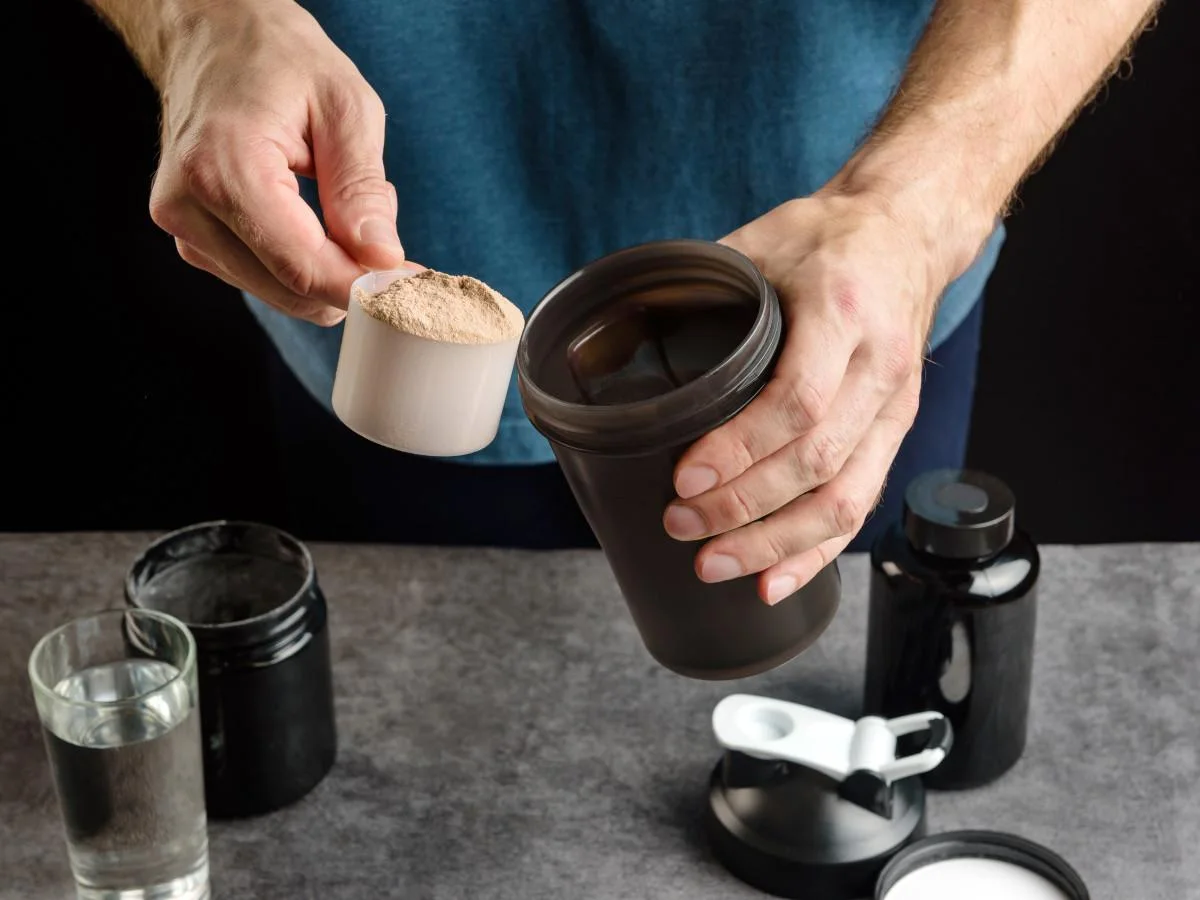
Before you spend money on a muscle-building supplement, ask two questions: does it actually improve training, and do you need it? The strongest evidence is not necessarily attached to the loudest tub. Creatine monohydrate, convenient protein and sometimes caffeine have sensible roles; products promising 'anabolic' gains without better training are a different proposition. This guide sorts ingredients by evidence, useful dose, cost and practical limitations, without treating every popular powder as essential.
Quick answer: for generally healthy adult lifters, creatine monohydrate is one of the best-supported performance supplements; whey or plant protein is useful only when it helps meet daily protein needs; and caffeine may improve exercise performance but is not a direct muscle-growth powder. Supplements should follow progressive lifting, adequate calories, recovery and the right daily protein intake—not replace them. If you are pregnant, breastfeeding, under 18, have kidney or heart disease, take medicines or compete under anti-doping rules, seek individual professional advice before using supplements.
What are the best supplements for muscle growth?
Creatine monohydrate and protein powder have the clearest practical case for bodybuilders, but they work differently. Creatine supports repeated high-intensity performance and training adaptations; protein supplies the amino acids needed for muscle repair. Both are useful only in the context of a suitable lifting programme. The US National Institutes of Health Office of Dietary Supplements reviews these ingredients alongside many others and identifies the limits of the evidence.
| Supplement | Evidence-based use | Typical adult use | Worth prioritising? |
|---|---|---|---|
| Creatine monohydrate | Repeated intense effort, strength and training adaptations | 3–5g per day | Often yes, if appropriate |
| Whey or suitable plant protein | Conveniently closes a protein intake gap | Amount needed to meet daily food target | Only if food intake falls short |
| Caffeine | Can improve alertness and exercise performance | Individual tolerance, low dose first | Optional; sleep and side effects matter |
| Beta-alanine | May aid selected high-intensity exercise lasting around 1–4 min | Protocol-specific, not essential for hypertrophy | Lower priority for most bodybuilders |
| BCAAs | No clear added benefit when complete daily protein is adequate | No established extra muscle-growth requirement | Usually no |
| Glutamine for muscle growth | Limited evidence of direct hypertrophy benefit in well-fed adults | No established routine for muscle growth | Usually no |
| 'Testosterone boosters' / proprietary stacks | Benefits frequently unsubstantiated; quality and interactions vary | No reliable universal dose | Avoid unsupported promises |
This is a hierarchy of practical value, not a declaration that an ingredient works for every person. Check the product label, third-party testing and applicable regulations before use.
Does creatine actually help build muscle?
Creatine monohydrate can support muscle and strength gains during resistance training. It raises intramuscular creatine stores, helping regenerate energy for short, repeated high-intensity efforts. Over time this can support more productive training, which may contribute to gains in lean mass. The research does not mean creatine directly manufactures muscle in the absence of exercise.
Creatine can also cause a short-term rise in body mass due to additional water stored in muscle. Don't mistake an immediate scale increase for an equal amount of new muscle tissue. NIH evidence summary; ISSN creatine position stand.
Is 5g of creatine a day enough?
For most healthy adults using creatine, 3–5g of creatine monohydrate per day is the commonly studied maintenance range. A loading phase is optional: some research protocols use around 20g a day divided into four doses for 5–7 days before switching to maintenance, whereas taking 3–5g consistently without loading builds stores more gradually. Taking more does not guarantee more muscle.
Consistency matters more than whether you mix it before or after a session. Use a clearly measured serving and consult a clinician where medication use, medical conditions or other individual factors make it appropriate.
Is whey protein better than creatine for gaining muscle?
Neither is 'better' because they solve different problems. Whey provides essential amino acids; creatine supports high-intensity exercise capacity. If you already get enough protein from food, an extra shake is unlikely to have the same value as meeting an existing shortfall. If your training is inconsistent, adding creatine will not solve the programme problem either.
The International Society of Sports Nutrition protein position stand describes a general daily intake around 1.4–2.0g per kilogram for most exercising adults, while off-season bodybuilding recommendations often use 1.6–2.2g/kg. At 75kg, 1.6–2.2g/kg would be approximately 120–165g daily; that can come from meals, powders, or a mixture.
Do you need protein powder to build muscle?
No. You need adequate protein, not a particular tub. For a practical day, a meal built around eggs, poultry, tofu, fish, Greek-style yoghurt, pulses or other protein-rich food contributes towards the same overall target. A protein shake is an option when travel, appetite, budget or meal preparation makes food less convenient.
Compare powders by actual protein per serving, ingredients you tolerate and cost per 25g of protein—not just price per container. For a comparison of a specific alternative, see FM Coaching's published beef protein powder versus whey guide.
How much protein do you need for bodybuilding?
For most adult bodybuilders in a muscle-gaining phase, roughly 1.6–2.2g/kg/day is a useful evidence-informed range. The exact target depends on training, energy intake and individual needs. A 2019 review focused on natural off-season bodybuilders recommends distributing sufficient protein across regular meals, while the ISSN provides a broad recommendation for exercising adults. Someone with relevant kidney disease should not copy a bodybuilding protein target without personalised medical advice.
| Body weight | 1.6g/kg/day | 2.2g/kg/day |
|---|---|---|
| 60kg / 132lb | 96g | 132g |
| 70kg / 154lb | 112g | 154g |
| 80kg / 176lb | 128g | 176g |
| 90kg / 198lb | 144g | 198g |
These are intake ranges, not minimums every person must force-feed. A competent nutrition plan should also meet energy, fibre, micronutrient and food-quality needs.
Are BCAAs worth taking for muscle growth?
Usually not if your daily protein intake already supplies enough essential amino acids. BCAAs are three amino acids: leucine, isoleucine and valine. Their role in muscle metabolism is real, but additional BCAA powder has not consistently improved muscle growth beyond a diet containing enough complete protein. The NIH evidence review notes that findings are inconsistent, particularly when dietary protein is adequate.
If you currently buy both whey and BCAAs, compare what they provide. A complete protein source already contains BCAAs plus the other essential amino acids required for new muscle proteins.
Should you take creatine before or after a workout?
Either timing is reasonable; daily intake matters more than a narrow pre- or post-workout window. Creatine works by increasing stored muscle creatine over time, not by acting like an immediate stimulant. Take it at a time you can remember, with a meal or shake if you prefer. If it causes gastrointestinal upset, trying a smaller dose with food can help.
Can caffeine or pre-workout build muscle?
Caffeine can improve certain workout outcomes, but it is not a direct muscle-building ingredient. Better alertness or the ability to complete productive work might indirectly help training, but high doses can worsen sleep, anxiety or heart symptoms. A caffeine-containing pre-workout also may include other ingredients with less clear benefits. Check the total caffeine from coffee, drinks and supplements before combining them.
Those who are caffeine-sensitive, pregnant, managing certain health conditions or taking interacting medications should seek appropriate advice. Avoid treating aggressive proprietary 'energy' blends as a requirement for effective training.
Are testosterone boosters effective for bodybuilding?
Over-the-counter 'testosterone booster' products generally do not have convincing evidence that they reliably raise testosterone or build muscle in otherwise healthy adults. Marketing claims, ingredient doses and purity can vary. Certain supplement categories may contain undeclared pharmacologically active substances, making them especially problematic for tested athletes. If you suspect clinically low testosterone, medical assessment is more useful than a random supplement stack.
What supplements should beginners buy first?
Buy nothing until you know your training and eating needs. For a beginner, the order of operations is simple: choose an appropriate resistance-training programme, eat enough, get consistent sleep, estimate protein intake, then consider creatine or protein powder if they solve a specific problem. A basic bodybuilding meal-prep routine can do more for day-to-day consistency than an expensive shelf of products.
| If your problem is... | First thing to fix | Possible supplement |
|---|---|---|
| Not reaching daily protein target | Meals and protein portions | Whey or appropriate plant protein |
| Weak progress in repeated hard sets | Programme, sleep, recovery | Creatine monohydrate may be useful |
| Low energy every session | Sleep and total food intake | Caffeine only when suitable |
| Slow muscle gain | Training progression and sufficient calories | No substitute for fixing these |
How can you tell if a supplement is good quality?
Look for a clearly disclosed ingredient list, actual quantities and reputable independent testing. Products marketed as 'proprietary blends' may hide how much of each ingredient is present. Competitive athletes should use screening programmes relevant to their federation, such as Informed Sport or NSF Certified for Sport where applicable, while recognising certification reduces but cannot eliminate risk. Check lot numbers, expiry dates and allergen information. An 'FDA approved' claim for an ordinary dietary supplement is a warning sign in markets where supplements are not pre-approved like medicines.
Best supplements for muscle growth: FAQs
Can you gain muscle without supplements?
Yes. Progressive resistance training, enough food and sufficient protein can support muscle gain without any supplement.
Is creatine safe for women?
Creatine has been studied in men and women and typical doses are generally well tolerated by healthy adults. Anyone with individual medical considerations should seek clinical advice.
Does creatine make you fat?
Creatine may increase scale weight through water stored in muscle; that is not the same as body-fat gain.
Do I need BCAAs if I drink whey protein?
Generally no. Whey already contains BCAAs and the full complement of essential amino acids.
Can I take protein powder and creatine together?
Yes, healthy adults commonly use them together. They serve different roles, and neither requires a special combination for effectiveness.
How quickly do muscle-building supplements work?
Training adaptations occur over weeks and months. Creatine may affect body mass early through water retention, but visible muscle growth takes longer.
What's the cheapest useful muscle-building supplement?
If you can use supplements appropriately, plain creatine monohydrate often offers good value per dose. Protein powder only saves effort when it helps meet an otherwise unmet protein target.
Research sources and evidence limitations
- US NIH Office of Dietary Supplements: Exercise and Athletic Performance.
- ISSN creatine safety and efficacy position stand.
- ISSN protein and exercise position stand.
- Nutrition recommendations for bodybuilders during the off-season.
- ACSM 2026 resistance-training position stand.
Updated November 2026. Evidence reflects population-level research; product-specific ingredients, medical conditions, competition rules and personal circumstances can change the appropriate recommendation.
Questions and answers
Which supplement helps muscle growth the most?
Creatine monohydrate is a well-supported performance supplement; protein powder helps if daily dietary protein is insufficient.
Is 5g of creatine daily enough?
For most healthy adults using creatine, 3–5g daily is a typical maintenance range.
Do I need BCAAs if I take whey?
Usually not if adequate complete dietary protein is already consumed.
Is whey better than creatine?
They serve different functions: whey supplies amino acids; creatine supports repeated intense exercise.
Can I take creatine with a protein shake?
Yes. Healthy adults commonly combine them, although a particular timing is not necessary.
Can you grow muscle without any supplements?
Yes. Progressive lifting, adequate calories, protein and recovery are the fundamentals.
Are testosterone boosters proven to build muscle?
Most over-the-counter testosterone-boosting products lack convincing evidence for meaningful muscle growth in healthy adults.