FM Coaching · Fitness Guides
Chest Workout for Muscle Growth: The 8-Week Plan That Actually Progresses
A structured two-day chest workout with a complete eight-week progression, press substitutions and practical hypertrophy answers.
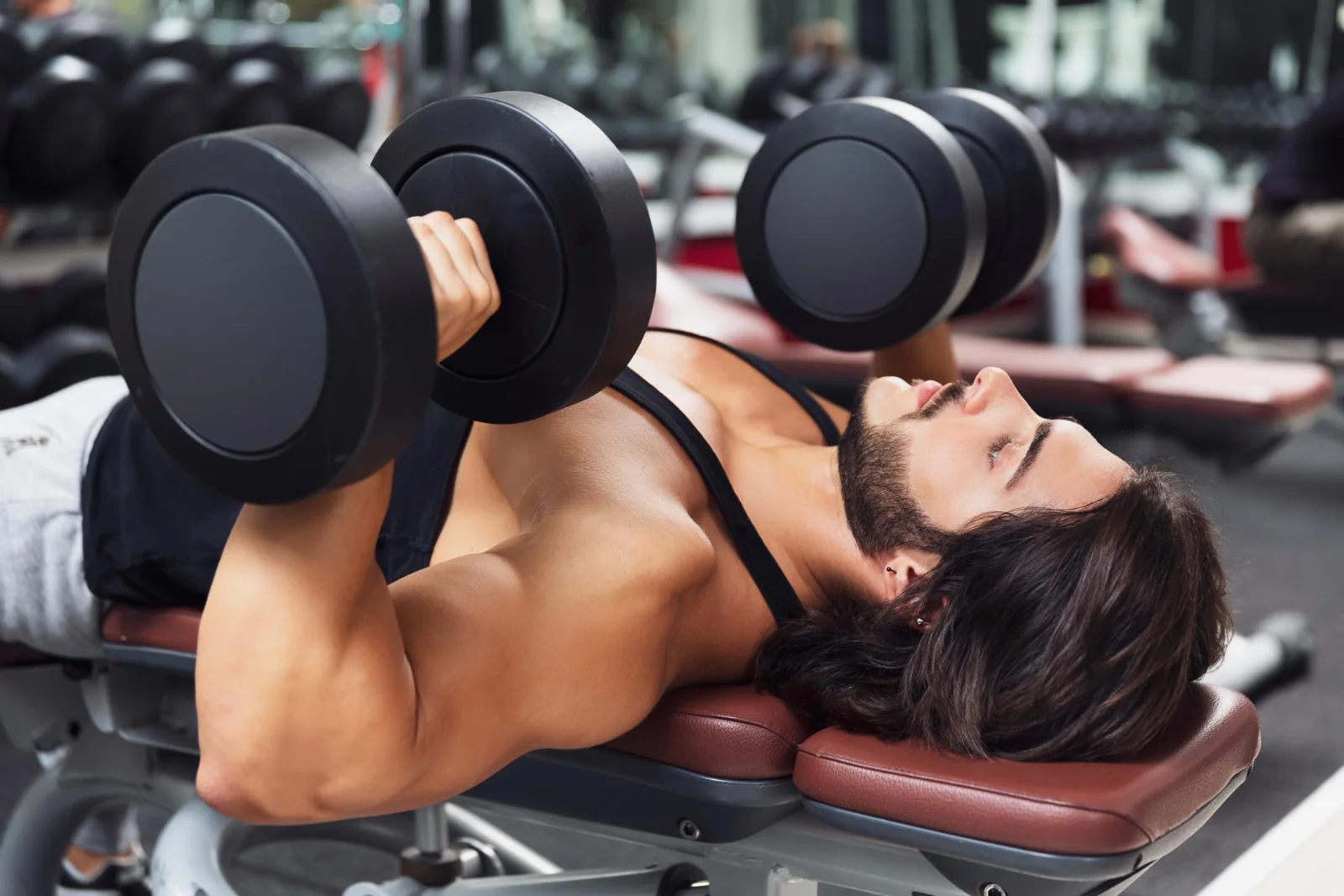
Want a bigger chest? Start with a repeatable plan, not another list of 27 exercises. The programme below takes two chest sessions a week and gives each one a job: one emphasises a strong flat press, the other spends more work on an incline. You'll know which lifts to repeat, what counts as progress, and how to adjust if your shoulders or recovery are not keeping up. Use it at any commercial gym; straightforward substitutions are included for a dumbbell-only setup.
The short version: train chest twice a week with at least two days between the sessions, aim for about 10–16 challenging chest sets a week if you already lift regularly, select loads that leave roughly 1–3 clean repetitions in reserve, and add weight only when your technique and repetition targets are solid. New lifters should start near the lower end of that weekly volume. There is no universal 'perfect' exercise or guaranteed eight-week result.
What is the best chest workout for muscle growth?
A practical chest-building session combines a horizontal press, an incline press and, if useful, a controlled fly or machine movement. It trains the pectorals through overlapping lines of pull, allows progressive loading and provides a manageable amount of weekly work. The 2026 American College of Sports Medicine review found that higher resistance-training volume—approximately 10 or more sets per muscle group each week—was associated with greater hypertrophy, while training to failure was not necessary.
| Session A — Flat press emphasis | Working sets | Reps | Rest |
|---|---|---|---|
| Flat dumbbell or barbell bench press | 3 | 6–10 | 2–3 min |
| Incline dumbbell press (15–30°) | 2 | 8–12 | 2 min |
| Cable fly or pec-deck | 2 | 12–15 | 60–90 sec |
| Session B — Incline emphasis | Working sets | Reps | Rest |
|---|---|---|---|
| Incline dumbbell or machine press | 3 | 6–10 | 2–3 min |
| Flat machine chest press or push-up | 2 | 8–12 | 2 min |
| High-to-low cable fly or pec-deck | 2 | 12–15 | 60–90 sec |
That's 14 chest-focused sets across the week before counting any additional chest work in other workouts. If you're starting out, do just the first two movements of each session with two working sets apiece (eight weekly sets), then add volume later if your recovery and progress warrant it. 'Working sets' exclude lighter warm-up sets.
How many times a week should I train chest to grow?
Two sessions a week is a convenient starting point, but total weekly hard sets are more important than frequency alone. The ACSM review found that training frequency did not consistently alter hypertrophy when total volume was equated. Distributing sets over two days makes it easier to maintain press quality and recover than squeezing everything into one session. For example, train chest on Monday and Thursday or Tuesday and Friday, while arranging other upper-body sessions so triceps and shoulders are not exhausted beforehand.
Training chest three times a week can work, but three sessions are not automatically better than two if they simply create more fatigue. A busy beginner may grow with fewer sets and one or two sessions, particularly if coming from no consistent resistance training.
Does incline bench press work the upper chest?
Yes; incline pressing increases emphasis on the clavicular portion of the pectoralis major compared with flat pressing. A study of five bench angles found peak upper-pectoral electrical activity around a 30° incline, with higher inclines increasingly recruiting the front deltoids. The study measured muscle activation, not long-term growth, so it does not prove exactly 30° is the only effective angle. Start between 15° and 30°, keep your shoulder blades supported and choose a range of motion you can control. See the bench-angle study.
Flat pressing still trains the whole chest; an incline is an addition, not a reason to abandon the flat bench. There is no independent 'inner chest' muscle you can isolate with a special hand position.
Should you use dumbbells, barbells or chest-press machines?
All three can build chest muscle when you progress them with controlled technique. Choose the tool you can set up consistently and use comfortably. A barbell makes load increases straightforward; dumbbells allow each side to move independently; a well-fitting chest-press machine can reduce balancing demands and help you bring a set close to muscular fatigue. If one option causes joint pain, use another rather than forcing the movement.
| If you cannot use... | Try... | Keep the training target |
|---|---|---|
| Barbell bench press | Flat dumbbell or converging machine press | 3 sets of 6–10 |
| Incline bench | Low-incline Smith press or incline chest machine | 2–3 sets of 8–12 |
| Cable fly | Pec-deck, light dumbbell fly or push-up | 2 sets of 12–15 |
| Gym equipment | Weighted or harder push-up variations | Sets close to technical limit |
How do you progressively overload a chest workout?
Keep the exercise and technique consistent, then earn more repetitions before adding load. Say your dumbbell press target is 3 sets of 8–12: if you complete 10, 9 and 8 reps with good form, use the same weight next week. Once all three sets reach 12 controlled reps while leaving around one or two reps in reserve, move to the next sensible dumbbell increment. Your reps may temporarily drop; build them back up.
Record the bench angle, dumbbell weight, sets, reps and estimated reps in reserve in a note or spreadsheet. A 1kg improvement or two extra clean repetitions matter more than changing exercises every session.
What is the best eight-week chest workout plan?
The goal is eight weeks of measurable progression, not eight entirely different workouts. Use the two sessions above as the foundation. The weekly targets below are a flexible coaching framework, not a forecast of guaranteed muscle gains.
| Weeks | Main objective | What to record or change |
|---|---|---|
| 1–2 | Learn repeatable technique and select conservative working loads | Roughly 2–3 reps in reserve; record every set |
| 3–4 | Build repetitions within the prescribed ranges | Add reps while keeping bench angle and form constant |
| 5–6 | Increase loads after reaching the top of the rep range | Small increments only when all prescribed sets qualify |
| 7 | Consolidate work with consistent execution | Keep 1–2 reps in reserve on hard sets; avoid needless failure |
| 8 | Assess progress and manage fatigue | Compare matched-load reps; reduce volume if recovery is poor |
If fatigue accumulates or your pressing form deteriorates, do fewer sets for several days rather than chasing a test personal best. Muscle growth is a months-long process; an eight-week programme is a sensible block to assess, not a deadline for a certain chest measurement.
How many sets and reps are best for chest hypertrophy?
For most gym lifters, 6–12 reps on presses and 10–20 on fly variations is a useful working range. You can grow muscle with a wider range of repetitions if the sets are challenging and safely controlled; there is no magic 'hypertrophy number'. Start near 8–12 weekly sets if you're new, or around 10–16 if you have training experience and can recover, then evaluate actual progress. Higher volume is not automatically better.
For heavy presses, longer rest periods allow you to maintain performance. For lighter flyes, 60–90 seconds can be reasonable. If the next set is consistently weaker because you're gasping for breath, extend your rest.
Should I train chest to failure for maximum growth?
No. You can build chest muscle without taking every set to failure. The 2026 ACSM evidence review found that reaching momentary muscle failure did not consistently improve hypertrophy. Leave around one to three good reps in reserve on most compound sets; if an occasional controlled machine isolation set reaches failure, it should not compromise your recovery. Always use appropriate safety supports or a spotter for challenging barbell bench work.
Why is my chest not growing even though I bench press?
The usual reasons are inconsistent progression, limited weekly volume, too much fatigue or not enough time. Work through this short audit before adding five more exercises:
- Progress: Have your repetitions or load improved on the same press over six weeks?
- Frequency: Is your chest getting a meaningful stimulus at least once or twice weekly?
- Technique: Are you using a repeatable depth, appropriate range and stable shoulder position?
- Recovery: Are you sleeping enough and spacing demanding pressing sessions apart?
- Food: Is your calorie intake appropriate for your goal and your protein intake adequate?
If you have pain or substantial asymmetry, seek qualified clinical assessment rather than diagnosing a structural issue from online advice.
Can you build your chest with dumbbells only?
Yes. Flat dumbbell presses, low-incline presses, dumbbell flyes and push-ups provide a viable no-barbell programme. For a beginner, two weekly sessions with 2–3 sets of presses plus one lighter accessory is enough to establish progress. When the dumbbells become too light, use harder push-up variations, longer controlled ranges of motion or heavier adjustable weights rather than endlessly adding easy repetitions.
How should your chest workout fit around back, shoulders and arms?
Chest pressing already trains the anterior deltoids and triceps. Rather than stacking hard bench, shoulder press and dips on consecutive days, distribute pressing stress through the week. Put upper-back rowing, leg training or rest between chest sessions when possible. For a practical lower-body complement, FM Coaching's sumo squat technique guide covers a different major movement pattern.
If your goal is bodybuilding competition preparation rather than just adding muscle, chest size is only one part of your physique. Our bodybuilding divisions guide explains how different classes are assessed.
Chest workout FAQs
Is it better to train chest once or twice a week?
Twice weekly is a convenient way to distribute productive sets. With weekly volume equated, evidence does not show a consistent hypertrophy advantage of one frequency over another.
Are push-ups enough to build chest?
They can be, especially if you're new and the sets are challenging. As you become stronger, harder variations or added load may be needed to keep making progress.
What angle should an incline chest press be?
Try 15–30° first. A bench-angle activation study found upper-pec emphasis around 30°, although activation data do not prove one angle is best for long-term growth.
How long should a chest workout take?
Most sessions in this plan can fit within approximately 40–60 minutes, depending on warm-ups and rest periods. Quality matters more than extending the clock.
Do chest flyes replace bench presses?
No, but they are a useful accessory. The programme uses pressing for progressive loading and fly variations for complementary chest work.
Can I train chest if my shoulders hurt?
Do not push through persistent or worsening pain. Modify the exercise and seek assessment where appropriate; there is no universally safe press for every shoulder condition.
How long does chest muscle growth take?
Strength and coordination can improve before visible changes. Assess photographs, measurements and matched-load training performance across months, rather than expecting a guaranteed result in eight weeks.
Evidence and further reading
- ACSM (2026), Resistance Training Prescription for Muscle Function, Hypertrophy and Physical Performance.
- Bench inclination and pectoralis major activation, 2020. Electromyography, not a long-term hypertrophy trial.
- Bench press variations in competitive bodybuilders, 2019.
- International Society of Sports Nutrition protein position stand.
FM Coaching training guidance for generally healthy adults. Start below your capacity, seek qualified advice when necessary, and adjust training to your experience and recovery. Updated November 2026.
Questions and answers
What is the best chest workout for muscle growth?
A horizontal press, an incline press and optional fly work performed and progressed consistently across the week.
How often should I train chest?
Two sessions a week is a practical way to spread training volume; frequency alone is less important when weekly set volume is equated.
Does incline bench press build upper chest?
Yes, incline pressing emphasises the clavicular pectoral fibres; around 15–30 degrees is a practical starting angle.
How many chest sets per week?
Around 10 or more challenging sets per week can support hypertrophy for experienced lifters; beginners often need less and should progress gradually.
Should I train chest to failure?
No. Hard sets with about 1–3 good repetitions in reserve are an effective practical starting approach.
Can dumbbells alone build a bigger chest?
Yes, when dumbbell pressing and accessory work are progressively overloaded and repeated consistently.